Digital Information Twin - Definition and Benefits
Have you already heard of Digital Information Twin? "Digital Information Twin" or "DIT" is an important buzzword and one of the trend topics in the field of maintenance and service. But what does this term mean and what benefits does a Digital Information Twin offer?
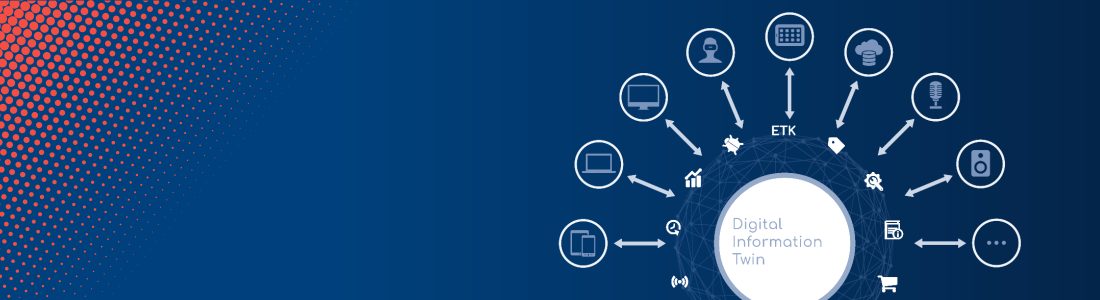
Definition of Digital Information Twin:
With a Digital Information Twin (DIT), high-quality technical and service information about a product, machine or plant is stored centrally in one platform and made available to users digitally. The information is stored permanently. A DIT therefore not only represents the original factory condition of a product, but also focuses on the entire product life cycle. It thus serves as a life cycle protocol of a product or machine.
The Digital Information Twin primarily contains comprehensive (service) information. In contrast to a Digital Engineering Twin, no product functions are simulated. The aim is to achieve a comprehensive, digital understanding of individual products, machines and plants and to use this for future maintenance and service measures.
What are the benefits of a Digital Information Twin?
With a Digital Information Twin you create an intelligent data model of your machines and plants. You synchronize relevant (service) information of all product components from different systems in one platform and make it available to service engineers, service technicians, maintenance staff and other users via an intuitive user interface. In this way, spare parts information, technical documentation, schematics, 2D and 3D graphics and any other type of service information is accessible and available at any time. The data is not only displayed, but also prepared and interconnected in such a way that considerable added value is generated.

Use a Digital Information Twin of your products, machines and plants to:
- Gain a better overview and comprehensive understanding of your machines, plants or products
- Increase the efficiency of your service and maintenance processes
- Increase the exchange of data and knowledge between departments
- Reduce the total cost of service and product lifecycle management
How to create a Digital Information Twin?
Here are some basic requirements for creating a Digital Information Twin:
- An integrated data processing
- Consistent master data
- Comprehensive data structures
- Meaningful data models
- Smart networking of all information
- A flexible, centralized system for aggregating data and information
Start with a solid foundation for the future using a Digital Information Twin now!
Create the foundations for tomorrow today. Build an intelligent data model of your machines and systems by providing high-quality technical and service information aggregated and smartly networked in an aftersales and service platform. Develop a comprehensive, digital understanding of your machines and products and pave the way for your Digital Information Twin.
Quanos InfoTwin helps you to do this!